 Sign in

Displaying 61 to 73 of 73 Publications
Russian Wheat Aphid
by J. P. Michaud Phillip E. Sloderbeck
MF2666
The Russian wheat aphid is a small, lime-green aphid with a distinctive football-shaped body. They prefer to feed in rolled leaves on the upper parts of the plant.Published Date: May 2005


Overley Hard Red Wheat
by Allan K. Fritz Terry J. Martin James P. Shroyer
L924
Overley is a bronze chaffed, semi-dwarf hard winter wheat, most closely resembling Jagger. It is medium-height with very good straw strength, excellent yield potential, and is early maturing.Published Date: Apr 2004

Managing No-till Wheat Following a Summer Crop in Eastern Kansas
by Scott A. Staggenborg James P. Shroyer Dale F. Leikam
MF2641
Wheat is often no-till planted into heavy summer-crop residue, and is typically planted later than continuously cropped wheat. Hardiness and above-average tillering are important.Published Date: Feb 2004
Karnal Bunt--Questions and Answers
by Robert L. Bowden Patrick J. McCluskey Tom Sim
MF2220
Discusses the the importance, controls and survey of the wheat disease karnal bunt.Revision Date: Jan 2003

Wheat Middlings Composition, Feeding Value, and Storage Guidelines
by Dale A. Blasi Gerry Kuhl Keith C. Behnke
MF2353
Optimal storage conditions and feed value of wheat middlings for livestock consumption.Published Date: Aug 1998
Wheat Production Handbook
by James P. Shroyer David A. Whitney Dallas E. Peterson
C529
Publication is in revision, so it is not available in print at present. This publication describes many aspects of producing wheat in Kansas. 42 p.
Revision Date: May 1997

Quality Oriented Marketing of Hard Winter Wheat
by Timothy J. Herrman Robert K. Bequette Patrick J. McCluskey
MF2119
Provides a description of quality evaluation techniques regarding hard winter wheat. Color photos of equipment and wheat.Published Date: Jun 1995
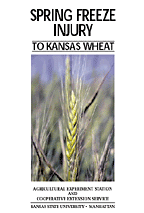
Spring Freeze Injury to Kansas Wheat
by James P. Shroyer Merrel E. Mikesell Gary M. Paulsen
C646
This publication describes temperature conditions that cause spring freeze injury, symptoms of injury, and management practices to use when wheat is injured. 12 p.Revision Date: Mar 1995
Harvesting Wheat
by Mark Schrock Randal K. Taylor
MF2026
Provides information on wheat harvesting. Suggests minor adjustments to the combine to drastically reduce grain losses or improve grain quality. Additional wheat saved is clear profit.Published Date: Mar 1995

Questions and Answers About Aeration Controllers
by Timothy J. Herrman Randall Higgins Carl Reed
MF2090
Addresses many of the most common questions about how aeration controllers are used to maintain grain quality and control insects.Published Date: Mar 1995

Small Grain Cereals for Forage
by Steve L. Watson Dale L. Fjell James P. Shroyer
MF1072
Small grain cereals (winter wheat, rye, barley, etc.) can be a valuable forage supplement to summer annuals and native grass pastures, and a good primary forage when backgrounding beef cattle.Published Date: Aug 1993

Wheat Pasture in Kansas
by James P. Shroyer Dale L. Fjell Kevin C. Dhuyvetter
C713
Wheat in parts of Kansas can be grazed without detrimental effects on grain yield. This publication discusses considerations to grazing wheat.Revision Date: Apr 1993
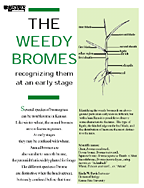
Weedy Bromes-Recognizing Them at an Early Stage
L814
Identifying weedy bromes (vs. wheat or smooth brome) at an early state is difficult, but with a hand lens it is possible to observe type of ligule, edge on leaf blade, & distribution of hairs. Photos.Published Date: May 1990
Displaying 61 to 73 of 73 Publications
